
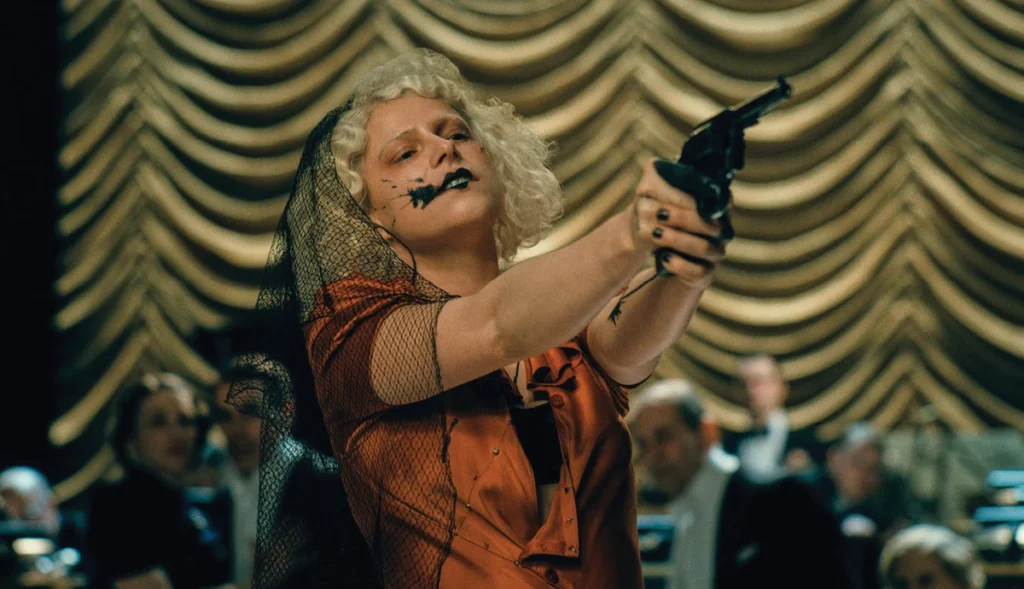
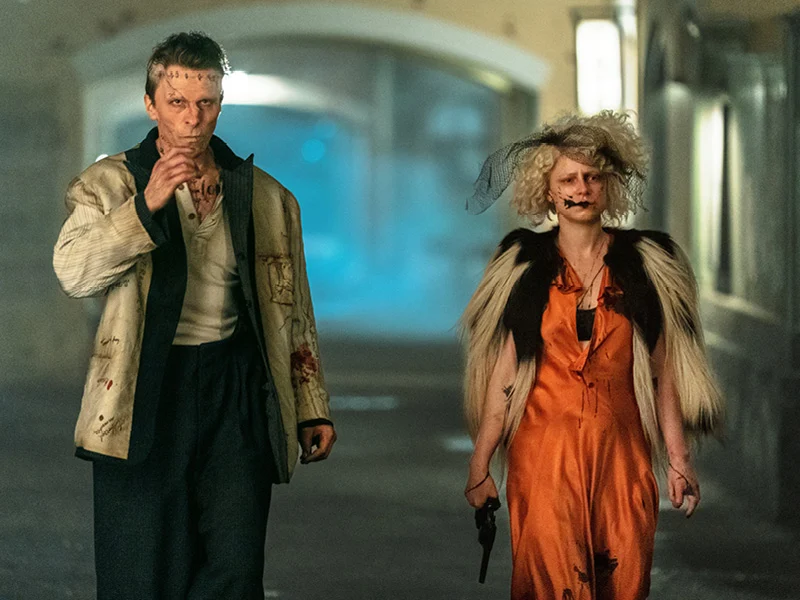
Chicago. 1940s. Lonely “Frank” (Christian Bale) travels all the way to meet the mad scientist Euphronius (played by Annette Bening) to help him create a companion, since eternity becomes lonely after a while. What both of them do not expect is the energy and power ‘The Bride’ brings to both of their lives.
Jessie Buckley plays Mary Shelley, Ida (The Brides’ former ‘form’) and The Bride. She carries the film with an astonishing presence and somehow manages to make every version of the character feel fully realized and three dimensional. Her Shelley laughter is something I might still hear for a really long time.
The films motifs revolve around creation, identity, and authorship which is all framed by the choice of having the woman who first imagined Frankenstein’s world as the fictional narrator of the story.
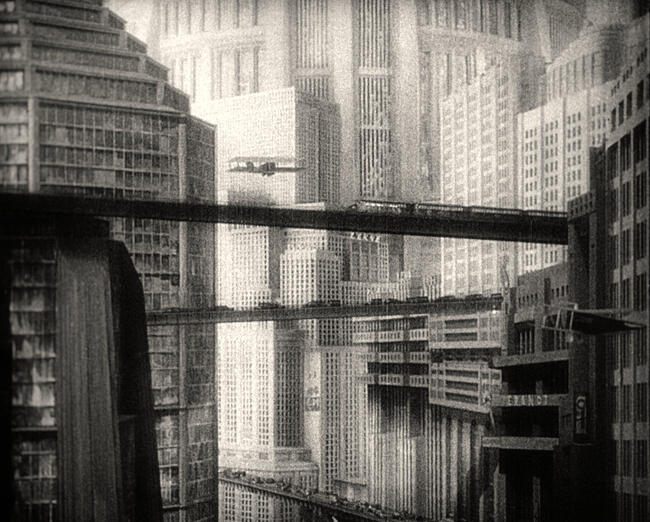
Maggie Gyllenhaal weaves in countless film references and moments that feel like love letters to the Golden Age of Hollywood. Very prominent is its visual homage to Fritz Lang’s ‘Metropolis’ (1927).
Visually and stylistically, the film is wildly inventive. It moves between grotesque horror, a romantic fantasy and an old Hollywood musical. Dancing becomes a recurring language of freedom and is a stylistic Christian Bale’s “Frank”enstein brings to the film with joy.
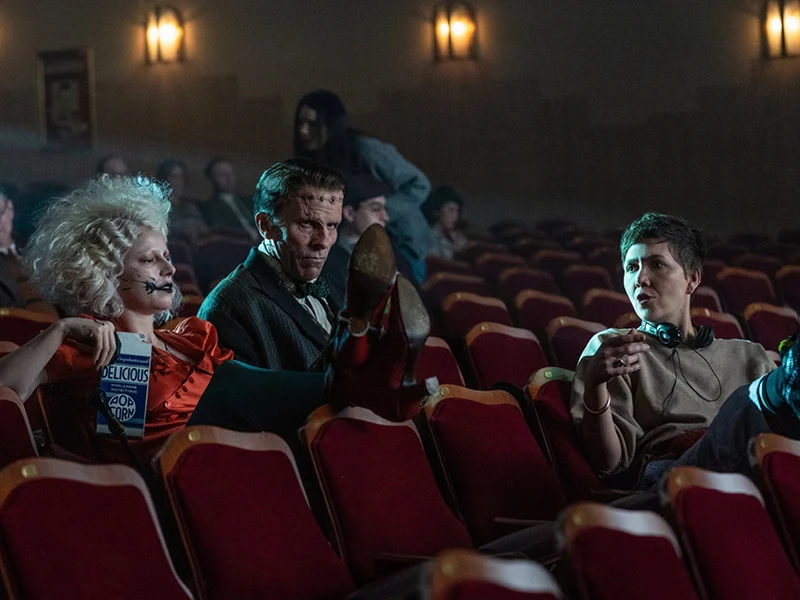
Bale manages to turn “Frank” into a character I truly adored until he also showed signs of possessiveness towards ‘The Bride’, beginning by constantly lying to her leading into him doubting her loyalty. There are glimpses before though, where we truly get a duo we didn’t think we needed. Their connection raises a central question the film never answers definitively: is this truly a love story? Or are we all watching a toxic relationship unfold?
The film constantly questions the idea of romance, autonomy, and companionship. The Bride loses control of her narrative and takes it back again and again. Men exist largely at the edges of the story, since this is fundamentally about the Bride deciding who she wants to be.
In many ways, the film feels like a celebration of female rage and female autonomy. She motivates other female characters to step up and speak.
As much as it works, at times, though, the film’s ambition works against it. With so many ideas, references, musical sequences, detective subplots, some storylines do feel a little underdeveloped.
Still, even when it stumbles, “The Bride” remains a fun experience. It is playful, avant-garde, and unapologetically strange. A film that invites the audience to question identity, autonomy, and the roles we are asked to play.