
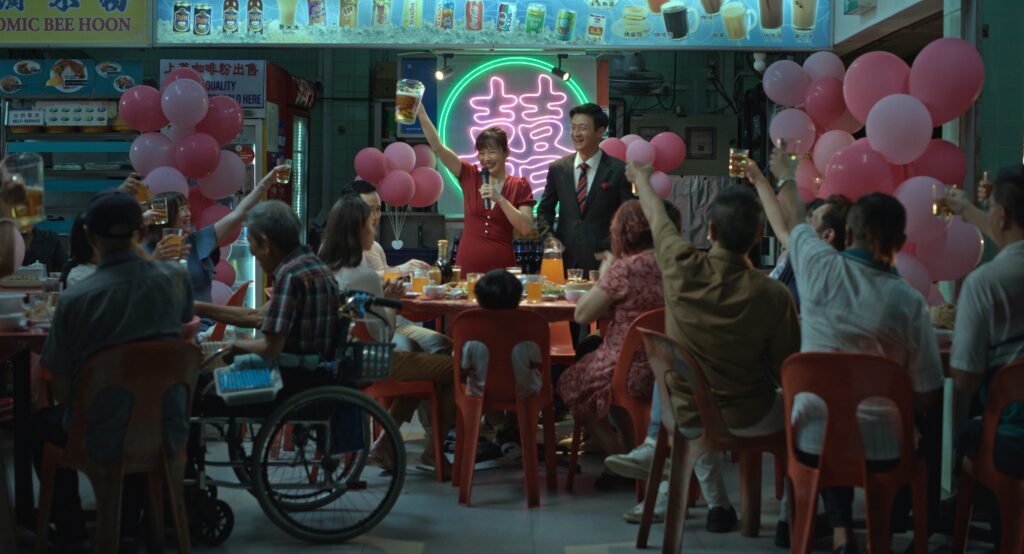
Wo Men Bu Shi Mo Sheng Ren (We Are All Strangers), directed by Anthony Chen, is a Singaporean drama set against the backdrop of modern-day Singapore. The story follows 21-year-old Junyang, who drifts through early adulthood with a sense of ease, largely unaware of the quiet sacrifices his father makes to sustain their modest household. His carefree outlook is disrupted when his relationship with his girlfriend takes a sudden and life-changing turn, pushing the young couple into responsibilities they are not fully prepared to shoulder. At the same time, his father finds himself drawn to a spirited woman whose presence subtly shifts the emotional landscape at home. As both father and son navigate love, disappointment, and growing obligations, they are compelled to reconsider their understanding of family and come to terms with the complicated ties that bind them, whether inherited or newly formed.
Seeing the film at the Berlinale made the experience even more special. There was something deeply moving about sitting in a room that recognized the significance of a Singaporean film reaching this stage. You could feel the pride, but also the vulnerability of sharing something so culturally specific with an international audience.
What struck me most is how lived-in everything feels. The characters are written with such care that they never come across as symbols or moral lessons. They feel like people you might know, carrying private disappointments and small hopes that rarely get spoken aloud. The film takes its time, allowing awkward silences, lingering glances, and half-finished conversations to do the emotional work. It trusts the audience to sit with discomfort and ambiguity.
At the same time, it is not relentlessly heavy. There are moments of humor that feel natural and disarming, the kind that arise in real families even in the middle of tension. The music choices add personality and warmth, grounding the story in a specific time and place. By the end, the film leaves you with a quiet ache rather than a dramatic catharsis. It is a reminder that family is rarely neat or fully resolved, and that love often exists alongside frustration and misunderstanding. That honesty is what makes the film linger long after the credits roll.