
This post contains spoilers. If you haven’t catches up on season 3 of the white lotus I highly recommend to skip this article.
When The White Lotus first premiered in 2021, it immediately captivated audiences with its comedic exploration of privilege and power. We loved to watch the drama unfold. The first two seasons sweeped at the Emmy’s and even without Jennifer Coolidges beloved Tanya, Season Three of creator Mike Whites satirical drama raised the bar once again.
First, let’s address the elephant in the room Tanya. Jennifer Coolidge’s unforgettable portrayal of the chaotic, self-destructive, and yet lovable character was the heart of the first two seasons. Her tragic end in Season 2 was hard to digest, and her absence in Season 3 left a noticeable gap. Tanya was probably that beloved since she was a symbol of everything the show critiques: privilege, insecurity, and a search for meaning in an empty world. Without Tanya, the show needed a new heartbeat.
Season 3 faltered in its storytelling. The show retained its signature chaos, but the mess felt even more pronounced this time. There was something beautifully reckless about how the storylines unfolded.
Jason Isaacs’ Stunning Performance

If there’s one standout this season, it’s Jason Isaacs’ portrayal of Timothy, the father of the Ratliff family. Bit by bit we watch him descend into madness, the minute he finds out that his business is failing. Isaacs captures the quiet unraveling of a man who is at the end of his rope, morally and emotionally. The tension between Timothy’s outward composure and his inner chaos creates some of the most gripping moments of the season. Especially in the finale when he picks up a toxic fruit to poison almost every other family member. Thinking they wouldn’t be able to cope with the loss of money and privilege.
Timothy’s moral decay was often mirrored in the lives of his family members, who were equally trapped by their own contradictions. What made it truly fascinating was how each family member’s struggle reflected the result of living a life built entirely on privilege and superficiality.
The Tragedy of Chelsea and Rick

As the show already stated: Chelsea represents hope. Rick represents pain and in the end one of the two will win. They were right.
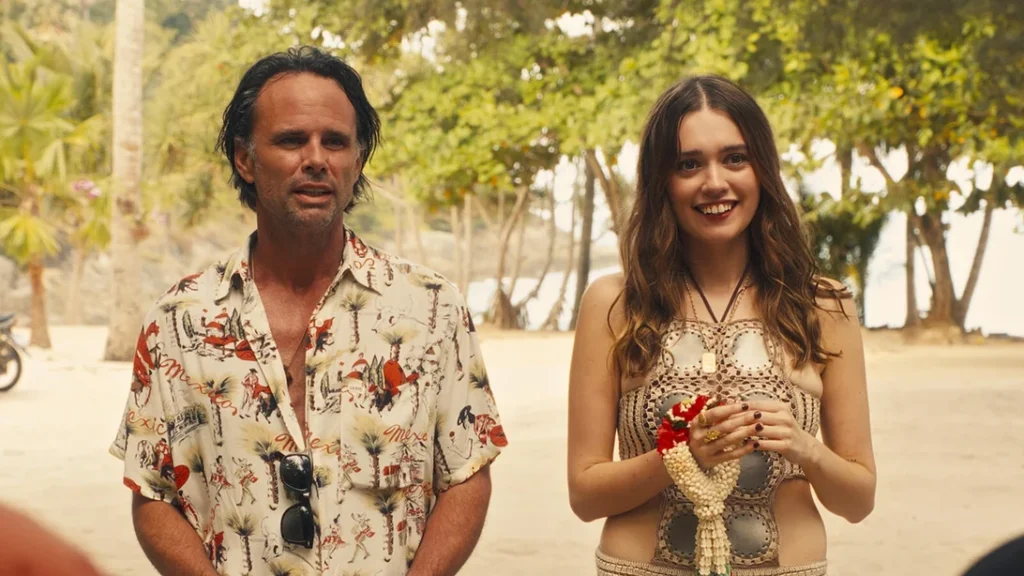
When it comes to tragic endings, The White Lotus delivers. We all know someone was going to die. We did not expect multiple people to go. The deaths of Chelsea and Rick were gut-wrenching, particularly Chelsea’s. Her tragic fate is a cruel twist, especially since she seemed to be the one character that was consistently grounded by hope throughout the season. Chelsea felt like the ultimate victim of circumstances beyond her control.
Meanwhile, Rick’s trajectory was one of light and dark. He confronted his own demons. Or so he thought. Ultimately he did become who he hated the most. The cause of his father’s death. The juxtaposition of their fates: Chelsea’s body facing the darkness, Rick’s the light almost like seeking redemption make an excellent shot in capturing the show’s recurring theme of moral responsibility and human flaws. Chelsea and Rick ultimately did embody Ying & Yang.
The Gossip Girls

One of the criticisms throughout the season was the underdeveloped subplots, particularly the storylines of Cate, Laurie & Jaclyn. While the performances were great, and certain characters like Laurie (Carrie Coon) added emotional depth to their dynamic. The ultimate lack of real payoff in these arcs left something to be desired. For instance, Laurie’s monologue about the value of time felt somewhat forced, and while Coon’s performance was compelling, the revelation didn’t feel earned within the context of the show.
Similarly, the Russians’ storyline, while intriguing, didn’t tie into the broader narrative as cohesively as I had hoped. Valentin’s escape and Gaitok’s rise to power felt disconnected from the main drama, almost like they belonged in a different show altogether.
overall thoughts on Amir Fati

The finale, titled Amor Fati, was a great embodiment of the season’s thematic undercurrents: fate, inevitability, and the consequences of our choices. The title itself, refers to the concept of embracing one’s fate.
The final moments did deliver some powerful emotional beats, especially when considering how Rick and Chelsea’s story arcs intersected and the way Belindas journey went full circle with her in a way, doing the fact same thing Tanya did in Season 1.
The White Lotus Season 3 was an experience that, while uneven at times, was undeniably entertaining. From twisted moral decisions of the Ratliffs to the tragic and darkly poetic deaths of Chelsea and Rick, the season was packed with moments that will stick around. Even Victoria Ratliff (Parkey Posey) and her iconic delivery of“You wanna live in Taiwan?!”
Mike White’s ability to keep the show chaotic, unpredictable, and fascinating is a testament to his brilliance as a creator. By the finale I also really started digging the new Intro!
I am highly awaiting what Mike White has in store for us next. Chaos, after all, is never truly finished.